Probato
정성적 소비자 반응을 해석 가능한 심리 신호와 의사결정 근거로 바꾸는 독립 프로젝트입니다. 2024년에 시작했습니다.
문제
만든 사람은 의도와 내부 맥락을 알지만, 소비자는 결과물만 봅니다. 이 해석의 간극 때문에 조직은 고객 반감이 어디서 시작되는지 놓치기 쉽습니다.
Probato는 논란이 얼마나 퍼질지 예측하기보다, 어떤 콘텐츠 자극이 어떤 도덕적 반감을 건드리는지 짚어 보는 출발점에 집중합니다.
정성적 데이터의 어려움
짧은 반응 하나에도 반어와 조롱, 입장, 감정, 문화적 맥락이 뒤섞여 있습니다. 겉보기에 같은 부정 표현이라도 그 밑에는 피해 우려, 배신감, 공정성 비판, 권위 거부처럼 서로 다른 심리가 깔려 있을 수 있습니다.
그래서 감성 점수만으로는 고객이 왜 반응했는지, 조직이 무엇을 바꿔야 하는지까지 설명하기 어렵습니다.
소비자 심리 구조
문제를 콘텐츠 자극, 반응 표상, 검토 단위로 나눴습니다. 반응 표상에서는 입장과 의미(주제)를 분리하고, 도덕성 기반을 고객 반감의 방향을 읽는 좌표로 삼았습니다.
이 구조는 무엇이 도덕적으로 옳은지 판정하지 않습니다. 고객 반응에서 어떤 심리적 프레임이 켜졌는지 비교하기 위한 분석 도구일 뿐입니다.
기술 구현
다중 소스 수집, 데이터 스키마, LLM 보조 라벨링, 6차원 도덕성 기반 벡터, 768차원 의미 임베딩, 군집화, 리스크 점수 프로토타입을 하나로 연결했습니다.
6D + 768D
도덕성 기반 신호와 의미 표현을 분리해, 무엇을 말하는지와 왜 반감이 생기는지를 서로 다른 축으로 다룹니다.
10,713
인코더 개발에 쓴 LLM 코딩 학습 예시의 개수입니다. 사람이 단 정답 레이블이 아니라는 한계도 함께 기록했습니다.
같은 주제, 다른 심리
의미 군집과 도덕성 기반 군집은 서로 다른 질문에 답합니다. 주제가 비슷한 것과 반감의 심리적 방향은 나눠서 봐야 고객 반응을 더 정확히 설명할 수 있습니다.
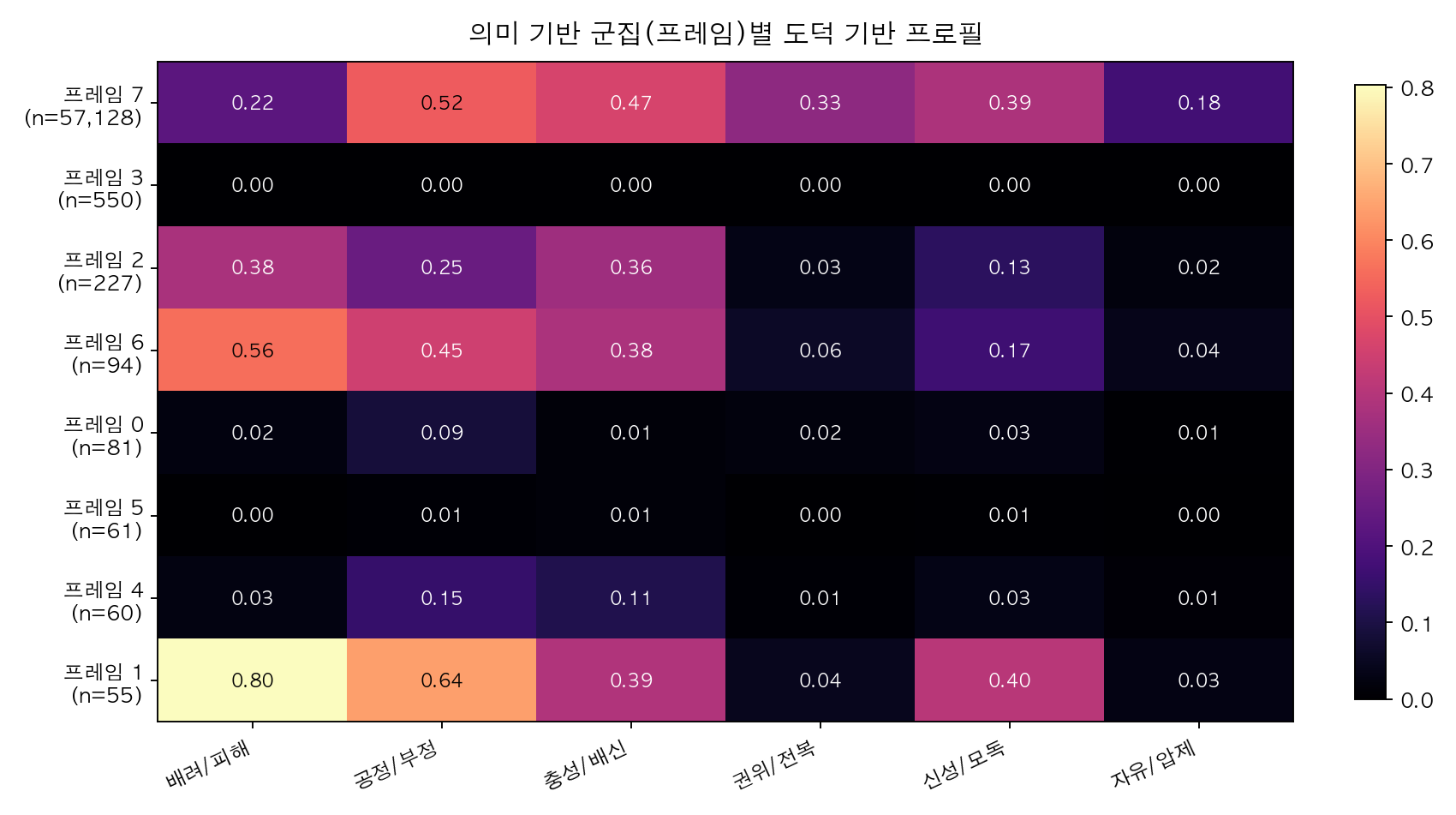
차트 설명과 데이터
번호는 군집화가 찾아낸 그룹을 구분할 뿐, 그 자체에 주제 의미는 없습니다. 프레임 7은 다른 군집보다 훨씬 크고, 평균 신호는 공정성 0.5243, 배신 0.4663, 신성성 훼손 0.3852, 권위 0.3256, 피해 0.2240, 자유 0.1756 순입니다.
| 프레임 | 건수 | 피해 | 공정성 | 배신 | 권위 | 신성성 훼손 | 자유 |
|---|---|---|---|---|---|---|---|
| 7 | 57,128 | 0.2240 | 0.5243 | 0.4663 | 0.3256 | 0.3852 | 0.1756 |
| 3 | 550 | 0.0001 | 0.0000 | 0.0000 | 0.0000 | 0.0001 | 0.0000 |
| 2 | 227 | 0.3786 | 0.2520 | 0.3555 | 0.0323 | 0.1343 | 0.0198 |
| 6 | 94 | 0.5589 | 0.4494 | 0.3817 | 0.0594 | 0.1680 | 0.0384 |
| 0 | 81 | 0.0227 | 0.0873 | 0.0131 | 0.0194 | 0.0301 | 0.0055 |
| 5 | 61 | 0.0012 | 0.0080 | 0.0140 | 0.0007 | 0.0050 | 0.0009 |
| 4 | 60 | 0.0281 | 0.1517 | 0.1121 | 0.0075 | 0.0324 | 0.0101 |
| 1 | 55 | 0.8032 | 0.6404 | 0.3910 | 0.0446 | 0.4048 | 0.0310 |
사례 근거
스타벅스 코리아의 2026년 실제 논란 사례에서 뉴스와 댓글, 커뮤니티, 공식 자료를 집계 단위로 묶었습니다. 플랫폼별 차이와 시간대별 신호를 비교해, 반응의 양보다 공정성·배신·신성성 훼손 같은 프레임이 어떻게 움직였는지를 읽었습니다.
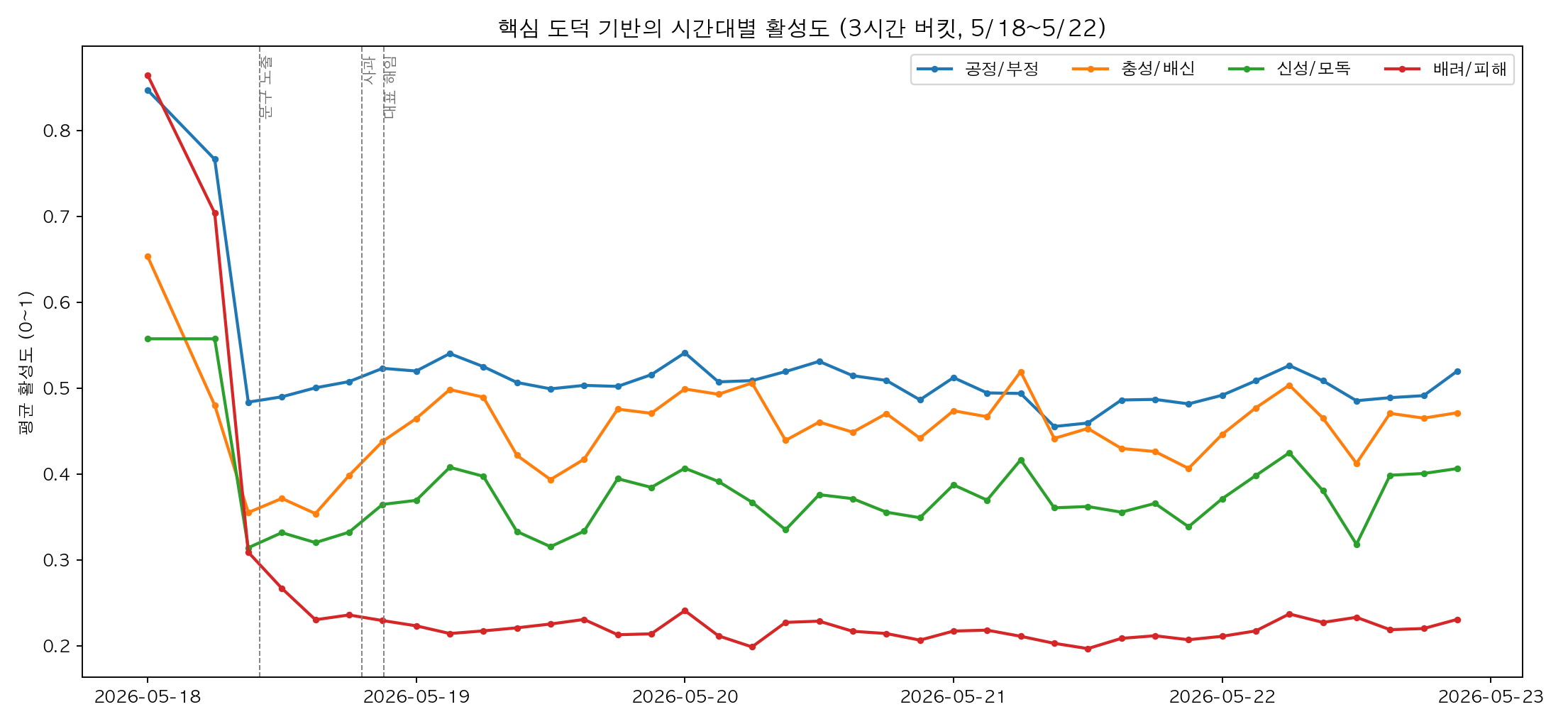
차트 설명과 데이터
5월 18일 첫 두 개의 희소 구간에서는 공정성과 피해 출력이 높습니다. 첫 사건 표시 이후에는 네 신호가 모두 낮아집니다. 5월 18일 늦은 시각부터 22일까지 공정성이 대체로 0.46-0.54로 가장 높고, 배신은 약 0.39-0.52, 신성성 훼손은 약 0.31-0.43, 피해는 약 0.20-0.24입니다. 세로선은 문구 노출, 사과, 대표 해임 시점을 나타냅니다. 이는 0-1 모델 출력을 3시간 단위로 평균한 값이며, 인과효과 추정치가 아닙니다.
역할
문제 정의부터 연구 설계, 수집 파이프라인, 스키마, 모델링, 분석, 해석, 공개 자료 구성까지 전 과정을 직접 맡았습니다.
코드 작성과 분류에는 AI 도구를 활용했습니다. 모델 출력은 그대로 믿지 않고 검증해야 할 분석 특성으로 다뤘으며, 수집 원문이나 비공개 데이터는 포트폴리오에 넣지 않았습니다.
한계
현재 결과물은 연구와 의사결정을 돕기 위한 프로토타입입니다. 검증이 끝난 논란 예측 모델이나 운영 중인 상용 서비스라고 말하지 않습니다.
도덕성 기반 레이블은 LLM이 만들어 낸 특성이며, 사람이 단 정답 레이블이 아닙니다. 플랫폼 표본, 맥락 해석, 모델에 따른 입장 분류 차이도 결과에 영향을 줄 수 있습니다.